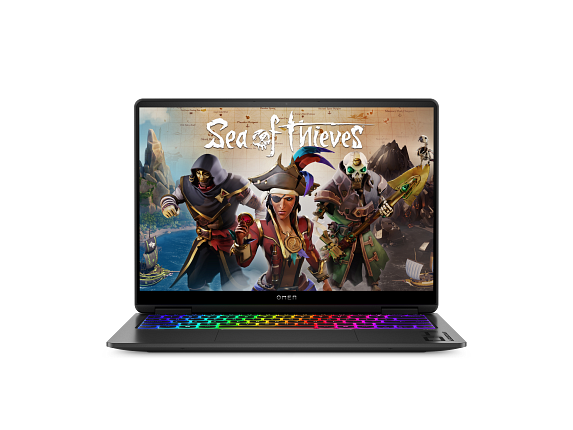
Best for higher frame rates
OMEN Transcend Gaming Laptop 14t-fb100, 14"
HP
Why it made the list: It suits people who genuinely carry their laptop all day and want it to feel like part of the backpack, not an extra burden.
Best Laptops for Streaming is really about balancing motion clarity, responsiveness, and the display headroom that matters in fast-moving workloads. This list leans into 16 GB of RAM or more, 1 TB of storage or more, 8+ CPU cores, a dedicated GPU, and 120 Hz+ displays so you can compare the laptops that actually fit the brief. Use it as a shortlist, then narrow further inside FilterKilter once you know which tradeoffs matter most to you.
Best Laptops for Streaming is for buyers comparing 16 GB of RAM or more, 1 TB of storage or more, and 8+ CPU cores. The hard part is separating meaningful specs from nice-looking extras, so this guide ranks live catalog picks by motion clarity, responsiveness, and the display headroom that matters in fast-moving workloads.
Affiliate disclosure: Links to retailers on this page are affiliate links. If you buy after clicking one, we may earn a commission at no extra cost to you. Commissions do not influence which laptops we rank or in what order. See our full Affiliate Disclosure.
Data & accuracy: Rankings are based on publisher specifications, retailer pricing snapshots, and published system requirements. We do not physically test every laptop listed, and prices, configurations, and availability change frequently. Always confirm the exact configuration and final price on the retailer’s site before buying. See our full methodology →
Informational only: Content on this site is provided for informational purposes and is not professional, financial, or technical advice. Use your own judgment when making a purchase.
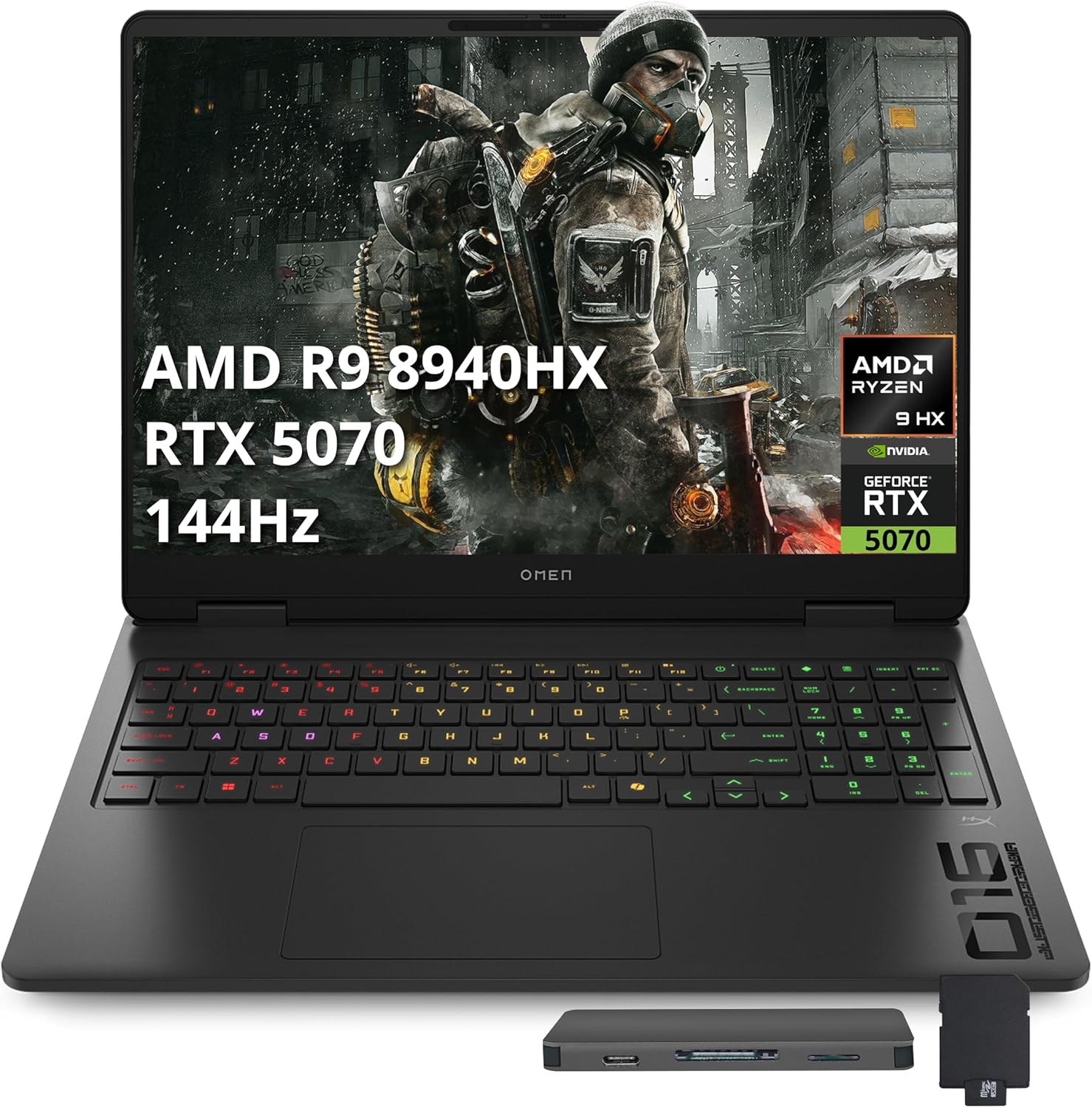
Best for higher frame rates
HP
Why it made the list: It suits people who genuinely carry their laptop all day and want it to feel like part of the backpack, not an extra burden.
2Image: Amazon · Affiliate link
Best for higher frame rates
Acer
Why it made the list: The fit is a buyer who wants fewer surprises rather than one standout feature. The 165Hz refresh rate makes scrolling and window animations feel smoother than the 60Hz panels most of this price band is stuck with. The RTX 5050 GPU gives it a much higher ceiling than the productivity-first picks around it for when the workload actually demands one.
Best for higher frame rates
Acer
Why it made the list: The audience is someone comparing the whole laptop, not just the loudest spec on the page. It tips the scale at 5.3 pounds, which is the price you pay for a proper keyboard deck and room for the components inside. A 16" panel lets you comfortably run two windows side by side, which is often what the smaller picks on this list cannot do without squinting. The extra display real estate costs you a little portability. That is the honest tradeoff for the extra working room.
Best for higher frame rates
ASUS
Why it made the list: It fits buyers who measure "good laptop" partly by how little they notice it in a bag. Skip it if you need one obvious headline spec. That is the catch. Compare closely.
Best for higher frame rates
ASUS
Why it made the list: The right reader is anyone who wants a capable all-rounder rather than a laptop optimized for a single task. Treat it as a comparison pick first: TUF Gaming identity is the part that should decide whether it belongs above a cleaner-looking alternative.
6Image: Amazon · Affiliate link
Best for higher frame rates
Alienware
Why it made the list: It earns its place by covering a broader everyday workload instead of solving only one narrow niche. The flip side is straightforward: you are paying for polish and headroom here, not just checking the minimum boxes for the category. Alienware 16 Aurora Gaming Laptop (16" QHD+ 120Hz, Intel 10-Core 7 240H, 32GB DDR5 RAM, 1TB SSD, NVIDIA GeForce RTX… keeps the sixth slot because 32GB memory with 1TB storage plus $1,600 street price gives this listing a specific job in the lineup.
Best for higher frame rates
Dell
Why it made the list: It belongs here because it keeps the everyday tradeoffs reasonably even. The 16GB RAM spec is the part that keeps it usable beyond the lightest browser-only routine. $1,659.99 puts it in upgrade territory, and the spec sheet actually reflects it rather than just charging for the badge. At this price you are buying real margin over the entry-level picks. Nice, but overkill if your workload actually fits on a mid-list machine.
Best for higher frame rates
Dell
Why it made the list: Reads as a gaming-series machine with real cooling under the hood more than a star attraction, which is exactly why it is useful alongside the flagships. It fits buyers who need a balanced machine more than a specialist for one workload. A dedicated NVIDIA® GeForce RTX™ 4050, 6 GB GDDR6 raises the ceiling above the productivity-first picks nearby for the occasional heavy task. Running 16" of screen makes multitasking less cramped, which is usually what people actually notice day to day. Skip it if a smaller, lighter machine would solve the same job. That is the catch. Compare closely. What separates this SKU is the mix of NVIDIA® GeForce RTX™ 4050, 6 GB GDDR6, 16GB RAM, 1TB SSD, which is why it has a distinct role here.
9Image: Amazon · Affiliate link
Best for higher frame rates
HP
Why it made the list: The point is everyday breadth: enough performance, enough portability, and few glaring gaps. Memory is not the bottleneck here. 16GB gives it enough room for normal work, school, and light creative overlap. At $1,729 it is priced like a step-up pick, not a bare-minimum buy. That is partly why it shows up in a different role than the cheaper entries here.
10Image: Amazon · Affiliate link
Best for higher frame rates
Lenovo
Why it made the list: It works as the practical middle path when none of the more specialized picks line up cleanly. A 2TB SSD gives it more breathing room than the 256GB-512GB drives common at this tier, especially once apps, project files, or games pile up. a Core i9 / Ultra 9 processor is the processing anchor here, giving the configuration a clearer workload fit than entry chips with nicer marketing names.
Use this guide as the shortlist, then refine by price, RAM, GPU, battery life, weight, display size, and software requirements inside the full FilterKilter tool.
Open FilterKilter — Full Filtering & Sorting Tool →Start with the non-negotiables for this kind of creative pro: performance, portability, display size, and price. Once those are aligned, compare smaller quality-of-life details like ports, keyboard feel, battery life, and thermals.
16 GB is the practical baseline here because it gives you enough headroom for multitasking and keeps the laptop from feeling cramped too quickly.
This category benefits from stronger graphics performance, but you should still judge the whole package: cooling, power limits, display quality, and battery life matter just as much as the GPU model.
NVIDIA. GPU-family context for gaming and GPU-accelerated creative guides. Accessed 2026-05-21.
Valve. Market context for common gaming hardware and realistic gaming expectations. Accessed 2026-05-21.
Adobe Help Center. Photo-editing and Adobe-app hardware requirements for creative guides. Accessed 2026-05-21.
Adobe Help Center. Video-editing requirements for creator and production guides. Accessed 2026-05-21.
Microsoft Support. Baseline Windows hardware requirements used when judging everyday Windows laptops. Accessed 2026-05-21.
FilterKilter scores every laptop in its catalog against official publisher system requirements. Open any title below for its minimum, recommended, and optimal specs — plus a live list of laptops that meet them.