Best Razer Blade Laptops

By the FilterKilter Editorial Team

Reviewed June 15, 2026Picks unchanged since May 31, 2026

How we rank

Best Razer Blade Laptops is really about balancing motion clarity, responsiveness, and the display headroom that matters in fast-moving workloads. This list leans into 16 GB of RAM or more, 1 TB of storage or more, a dedicated GPU, 120 Hz+ displays, and Razer laptops so you can compare the laptops that actually fit the brief. Use it as a shortlist, then narrow further inside FilterKilter once you know which tradeoffs matter most to you.

What to Look For

  • Aim for at least 16 GB of RAM here so the laptop still feels comfortable once you add browser tabs, meetings, and background apps.
  • Storage fills up faster than buyers expect, so treat 1 TB as a practical floor once apps, media, SDKs, or project files start to accumulate.
  • A dedicated GPU is part of the value equation in this category, but cooling and sustained performance matter just as much as the chip name on the spec sheet.
  • A 120 Hz-or-better panel can materially improve responsiveness, but it should not distract you from GPU capability, thermals, and battery tradeoffs.
  • Within a single brand, compare the display, keyboard, ports, and warranty details carefully because lineup quality can vary a lot from one series to another.

How We Chose

Best Razer Blade Laptops is for buyers comparing 16 GB of RAM or more, 1 TB of storage or more, and a dedicated GPU. The hard part is separating meaningful specs from nice-looking extras, so this guide ranks live catalog picks by motion clarity, responsiveness, and the display headroom that matters in fast-moving workloads.

  • 1Each pick must match the guide brief: 16 GB of RAM or more, 1 TB of storage or more, a dedicated GPU, 120 Hz+ displays, and Razer laptops.
  • 2The generator sorts matching laptops by overall FilterKilter rating first and applies a per-brand cap so one lineup does not crowd out the page.
  • 3Dedicated-GPU picks are judged on graphics capability, memory, cooling headroom, display quality, and price.
  • 4RAM and SSD capacity are treated as practical ownership factors, not just spec-sheet decoration.
  • 5Brand-specific guides compare product lines inside that brand rather than assuming every series has the same strengths.

Our Top Picks

Affiliate disclosure: Links to retailers on this page are affiliate links. If you buy after clicking one, we may earn a commission at no extra cost to you. Commissions do not influence which laptops we rank or in what order. See our full Affiliate Disclosure.

Data & accuracy: Rankings are based on publisher specifications, retailer pricing snapshots, and published system requirements. We do not physically test every laptop listed, and prices, configurations, and availability change frequently. Always confirm the exact configuration and final price on the retailer’s site before buying. See our full methodology →

Informational only: Content on this site is provided for informational purposes and is not professional, financial, or technical advice. Use your own judgment when making a purchase.

Best for daily carry

Razer Blade 14 - 3K 120 Hz OLED - GeForce RTX 5060 - Black

Razer

16 GB RAM1 TB StorageAMD Ryzen AI 9 365 Processor (10-Cores /20-Threads, 2 GHz Base/5 GHz Max boost) with Radeon 880M GraphicsNVIDIA GeForce RTX 506014"
$2,299.99

Why it made the list: Our top pick, and the reason is that it reads like the easiest laptop to live with on the move. The fit is a buyer who values lower carry weight as much as another small bump in benchmark speed. Weight is a real selling point here. 3.6 pounds is well under the category average and makes everyday carry a non-event. Memory is not the bottleneck here. 16GB gives it enough room for normal work, school, and light creative overlap. The flip side is straightforward: you are paying for polish and headroom here, not just checking the minimum boxes for the category. Its clearest spec identity is a high-end Ryzen 9 processor, NVIDIA GeForce RTX 5060, 16GB RAM, a combination that keeps it from blending into the rest of the list.

Razer Blade 14 Gaming Laptop: AMD Ryzen 9 5900HX 8 Core2

Image: Amazon · Affiliate link

Best for all-day battery

Razer Blade 14 Gaming Laptop: AMD Ryzen 9 5900HX 8 Core, NVIDIA GeForce RTX 3070, 14" QHD 165Hz, 16GB RAM, 1TB SSD…

Razer

16 GB RAM1 TB StorageAMD Ryzen 9 5900HXNVIDIA GeForce RTX 306014"12 hr battery
$2,799.95

Why it made the list: What keeps it near the top is that it fills the role of the battery-first alternative. It fits buyers who measure "good laptop" partly by how little they notice it in a bag. $2,799.95 puts it in upgrade territory, and the spec sheet actually reflects it rather than just charging for the badge. 16GB of RAM lands in the current sweet spot: enough for real multitasking without pushing the price up the way 32GB configurations tend to.

Razer Blade 17 Gaming Laptop: NVIDIA GeForce RTX 3060-11th Gen3

Image: Amazon · Affiliate link

Best for split-screen work

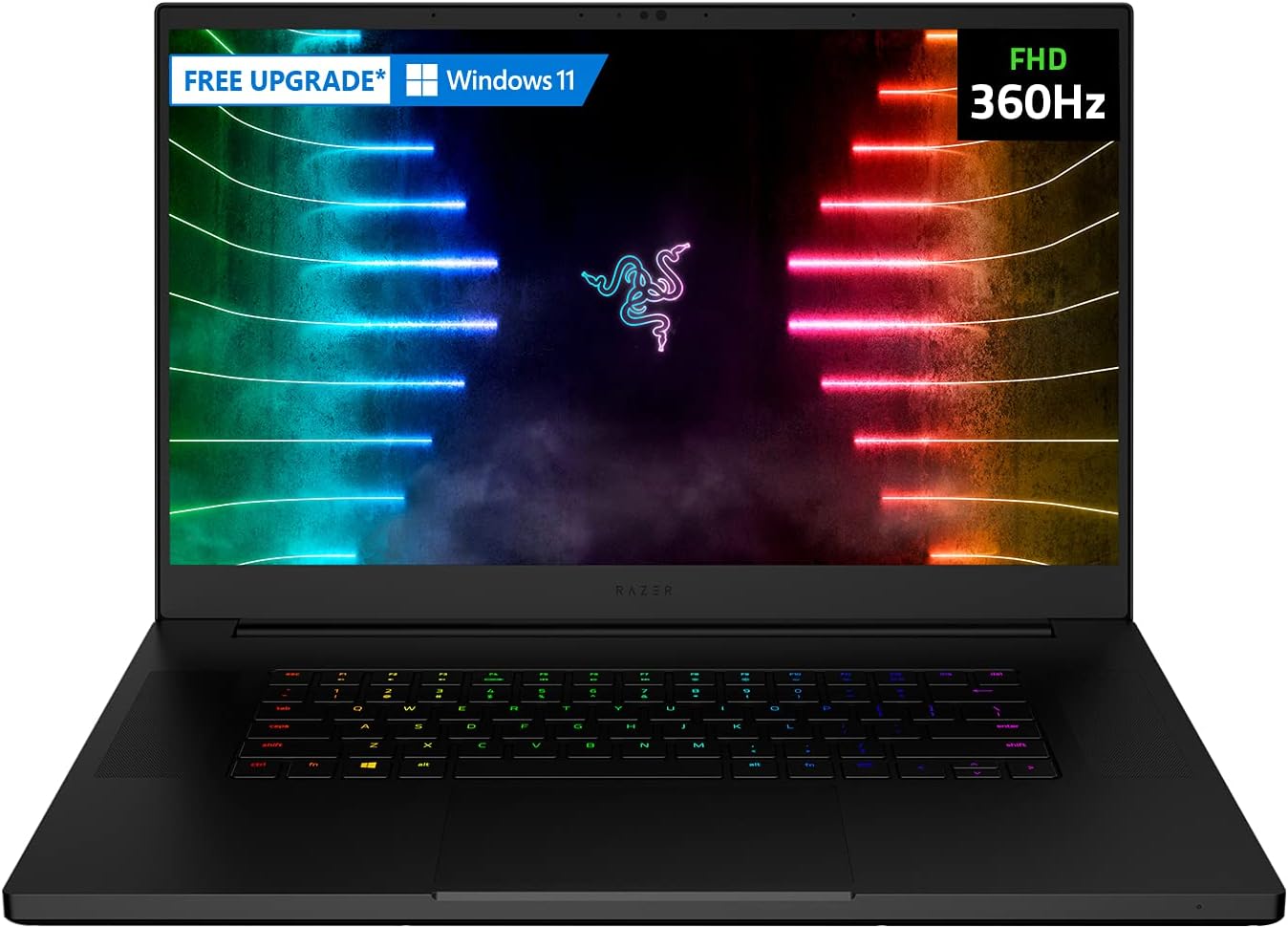
Razer Blade 17 Gaming Laptop: NVIDIA GeForce RTX 3060-11th Gen Intel 8-Core i7 CPU - 17.3" FHD 360Hz - 16GB RAM - 1TB…

Razer

16 GB RAM1 TB StorageCore i7NVIDIA GeForce RTX 306017"7 hr battery
$3,149

Why it made the list: Think of it as the desk-friendly screen upgrade. That is the niche it actually earns its place in. It earns its place by covering a broader everyday workload instead of solving only one narrow niche. The faster 360Hz screen gives it a smoother feel than basic productivity laptops, even outside games. Running 17" of screen makes multitasking less cramped, which is usually what people actually notice day to day. At this price you are buying real margin over the entry-level picks. Nice, but overkill if your workload actually fits on a mid-list machine.

Best for split-screen work

Razer Blade 18 - Dual UHD+ 240 Hz | FHD+ 440 Hz - GeForce RTX 5080 - Black

Razer

32 GB RAM1 TB StorageIntel Core Ultra 9 Processor 290HX Plus (36 MB Cache, up to 5.5 GHz, 24 cores, 24 Threads); Intel NPU up to 13TOPSNVIDIA GeForce RTX 5070 Ti18"
$3,999.99

Why it made the list: Its case on this list is that it works as the spacious-screen alternative. It works as the practical middle path when none of the more specialized picks line up cleanly. The 18" display is the real story. It gives you noticeably more room for split-screen research, long writing sessions, or multitrack timelines than the 13- and 14-inch picks nearby. It tips the scale at 7.1 pounds, which is the price you pay for a proper keyboard deck and room for the components inside. The bigger screen is useful, but it is also a reminder that this is more of a desk-friendly machine than a toss-it-in-any-bag pick. Skip it if you need one obvious headline spec. That is the catch. Compare closely.

Best for split-screen work

Razer Blade 16 - QHD+ 240 Hz OLED - GeForce RTX 5090 - Black

Razer

32 GB RAM2 TB StorageIntel Core Ultra 9 Processor 386H 2.1 GHz (18 MB Cache, up to 4.9 GHz, 16 cores, 16 Threads); Intel NPU up to 50TOPSNVIDIA GeForce RTX 509016"
$4,899.99

Why it made the list: It earns its slot by covering the role of the split-screen-friendly pick. It belongs here because it keeps the everyday tradeoffs reasonably even. OLED is the screen upgrade to notice, especially if your work benefits from deeper contrast and cleaner color than a basic LCD can show. The 16" screen gives it more working area than the 13-14" crowd, at the cost of being slightly more of an event to carry. The reason to keep it on the shortlist is narrow but real: 16" screen size gives it a specific lane when the surrounding picks start to blur together.

Want More Control?

Use this guide as the shortlist, then refine by price, RAM, GPU, battery life, weight, display size, and software requirements inside the full FilterKilter tool.

Open FilterKilter — Full Filtering & Sorting Tool →

Frequently Asked Questions

What should you compare first in this category?

Start with the non-negotiables for this kind of shopping shortcuts: performance, portability, display size, and price. Once those are aligned, compare smaller quality-of-life details like ports, keyboard feel, battery life, and thermals.

How much RAM is enough?

16 GB is the practical baseline here because it gives you enough headroom for multitasking and keeps the laptop from feeling cramped too quickly.

Why does a dedicated GPU matter here?

This category benefits from stronger graphics performance, but you should still judge the whole package: cooling, power limits, display quality, and battery life matter just as much as the GPU model.

Sources and Notes

Razer laptops

Razer. Current Razer laptop lineup context for brand-specific recommendations. Accessed 2026-05-21.

GeForce RTX laptop GPUs

NVIDIA. GPU-family context for gaming and GPU-accelerated creative guides. Accessed 2026-05-21.

Steam Hardware and Software Survey

Valve. Market context for common gaming hardware and realistic gaming expectations. Accessed 2026-05-21.

Windows 11 system requirements

Microsoft Support. Baseline Windows hardware requirements used when judging everyday Windows laptops. Accessed 2026-05-21.

Microsoft 365 and Office resources

Microsoft Support. Office and Microsoft 365 compatibility context for school, work, and productivity picks. Accessed 2026-05-21.

Browse All Laptop Buying GuidesClick to expand
← Browse all FilterKilter buying guides