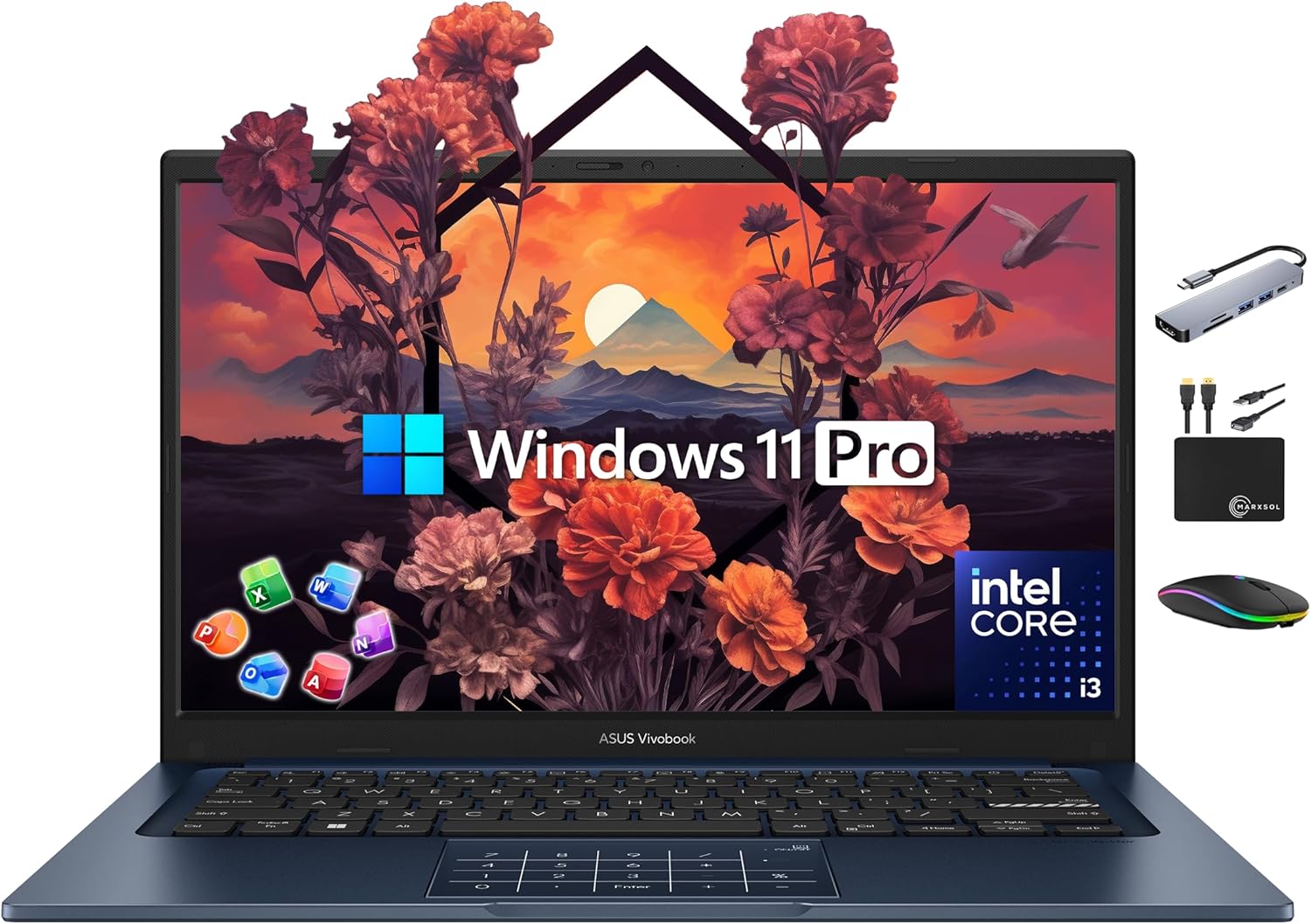
Best for split-screen work
Vivobook 15 Laptop F1502
ASUS
Why it made the list: It leads the guide because it slots in as the multitasking-screen pick. It belongs here because it keeps the everyday tradeoffs reasonably even.
Reviewed June 15, 2026Picks unchanged since Jun 11, 2026
How we rankASUS covers virtually every laptop category: the premium ZenBook series for ultraportable professionals, the versatile VivoBook for students and everyday users, the ROG (Republic of Gamers) line for serious gamers, and the TUF series for gaming on a budget. This guide highlights the best-rated ASUS models so you can find the right machine without getting lost in the lineup.
Best ASUS Laptops is for buyers comparing 8 GB of RAM or more, 512 GB of storage or more, and ASUS laptops. The hard part is separating meaningful specs from nice-looking extras, so this guide ranks live catalog picks by lineup differences, long-term value, and the models worth shortlisting first.
Affiliate disclosure: Links to retailers on this page are affiliate links. If you buy after clicking one, we may earn a commission at no extra cost to you. Commissions do not influence which laptops we rank or in what order. See our full Affiliate Disclosure.
Data & accuracy: Rankings are based on publisher specifications, retailer pricing snapshots, and published system requirements. We do not physically test every laptop listed, and prices, configurations, and availability change frequently. Always confirm the exact configuration and final price on the retailer’s site before buying. See our full methodology →
Informational only: Content on this site is provided for informational purposes and is not professional, financial, or technical advice. Use your own judgment when making a purchase.
Best for split-screen work
ASUS
Why it made the list: It leads the guide because it slots in as the multitasking-screen pick. It belongs here because it keeps the everyday tradeoffs reasonably even.
Best for split-screen work
ASUS
Why it made the list: It fits buyers who need a balanced machine more than a specialist for one workload. Storage is one of its quieter strengths: 1TB gives the configuration room to age without immediate cleanup chores.
Best for split-screen work
ASUS
Why it made the list: The fit is a buyer who wants fewer surprises rather than one standout feature. Running 15.6" of screen makes multitasking less cramped, which is usually what people actually notice day to day. The 3.8-pound carry weight keeps it in practical everyday-bag range rather than pushing it toward desk-only duty.
Best for split-screen work
ASUS
Why it made the list: Its case on this list is that it works as the big-panel productivity play. The point is everyday breadth: enough performance, enough portability, and few glaring gaps. A 15.6" panel nudges it toward desk-friendly productivity rather than the always-in-your-bag school laptop. The 1TB drive is useful margin for buyers who keep media, course files, local projects, or a game library on the machine. Skip it if a smaller, lighter machine would solve the same job. That is the catch. Compare closely. The configuration to notice is 8GB RAM, 1TB SSD, which gives this specific pick its place at #4.
Best for split-screen work
ASUS
Why it made the list: It earns its slot by covering the role of the roomier big-screen option. It earns its place by covering a broader everyday workload instead of solving only one narrow niche. The 15.6" screen gives it more working area than the 13-14" crowd, at the cost of being slightly more of an event to carry. A 1TB SSD gives it more breathing room than the 256GB-512GB drives common at this tier, especially once apps, project files, or games pile up. This is the pick to compare carefully against the one above it: 15.6" screen size is the detail that changes the buying logic, not a vague sense that pricier must be better.
6Image: Amazon · Affiliate link
Best for all-day battery
ASUS
Why it made the list: The angle here is simple: the outlet-avoidance pick, plus the basics. The right reader is anyone who wants a capable all-rounder rather than a laptop optimized for a single task. Battery life is the headline: at roughly 6 hours on the spec sheet, it is built to outlast an entire class day before it needs an outlet. A 14" footprint keeps it firmly on the portable side of the portability-vs-workspace tradeoff.
Best for split-screen work
ASUS
Why it made the list: Reads as the larger-display choice more than a star attraction, which is exactly why it is useful alongside the flagships. The audience is someone comparing the whole laptop, not just the loudest spec on the page. 16GB of RAM lands in the current sweet spot: enough for real multitasking without pushing the price up the way 32GB configurations tend to.
Best for daily carry
ASUS
Why it made the list: This pick stays relevant by being the easiest carry on the page without pretending to do every job. Skip it if the lowest possible price matters most. That is the catch. Compare closely.
Best for split-screen work
ASUS
Why it made the list: Keep it in the mix if the spacious-screen alternative is closer to your needs than a flashier top pick. Memory is not the bottleneck here. 16GB gives it enough room for normal work, school, and light creative overlap.
10Image: Amazon · Affiliate link
Well-rounded pick
ASUS
Why it made the list: Lower on the page, the argument shifts to a well-rounded alternative and day-to-day practicality. It makes the most sense when the laptop spends as much time in transit as it does open on a desk. The 16GB memory configuration is the practical baseline now, especially if your day includes a browser, meetings, documents, and background apps. A 3.1-pound chassis strikes the workable middle ground between take-anywhere thin-and-lights and heftier 15-inch boxes. The reason to keep it on the shortlist is narrow but real: 14" screen size gives it a specific lane when the surrounding picks start to blur together.
11Image: Amazon · Affiliate link
Well-rounded pick
ASUS
Why it made the list: It works as the practical middle path when none of the more specialized picks line up cleanly. With 16GB onboard, it has the multitasking cushion that many cheaper 8GB configurations lack. Its an entry-level processor gives the rest of the spec sheet a solid base, especially when multitasking or heavier apps enter the picture.
Best for split-screen work
ASUS
Why it made the list: The reason it remains here is the multitasking-screen pick, especially when the higher picks miss that exact lane. What separates this SKU is the mix of 8GB RAM, 512GB SSD, which is why it has a distinct role here. Skip it if you need one obvious headline spec. That is the catch. Compare closely.
Filter every ASUS model by GPU, display refresh rate, battery life, and price in the full FilterKilter tool.
Open FilterKilter — Full Filtering & Sorting Tool →ROG is ASUS's premium gaming line with the best cooling, fastest displays, and highest-end GPU configs. TUF offers solid gaming at a lower price point with slightly less aggressive cooling and fewer premium touches. If budget is tight, TUF is excellent value. If you want the best performance, ROG is the way to go.
ASUS consistently places in the top tier of reliability surveys. The ZenBook and ROG lines in particular are known for build quality and longevity. Like all brands, buying within the current generation and a supported price tier helps.
The VivoBook series is the strongest value for most students; good performance, lightweight design, and affordable pricing. ZenBook is worth considering for students who want a slimmer, more premium machine.
ASUS. Current ASUS laptop lineup context for brand-specific recommendations. Accessed 2026-05-21.
Microsoft Support. Baseline Windows hardware requirements used when judging everyday Windows laptops. Accessed 2026-05-21.
Microsoft Support. Office and Microsoft 365 compatibility context for school, work, and productivity picks. Accessed 2026-05-21.
Zoom Support. Video-meeting requirements used for student, remote-work, and business recommendations. Accessed 2026-05-21.